![Logo Black.png]](https://help.opensend.com/hs-fs/hubfs/Logo%20Black.png?height=33&name=Logo%20Black.png)
Available Reports
|
Report |
What It Shows |
|
Tracks the total order value attributed to Opensend-identified contacts over the past year, broken down by month. This report gives you a clear view of revenue trends tied to Opensend activity. |
|
|
Provides a comprehensive month-by-month breakdown across six key engagement and revenue metrics — Checkout Started, Viewed Product, Clicked Email, Opened Email, Placed Order, and Received Email — all filtered to Opensend-tagged contacts. |
|
|
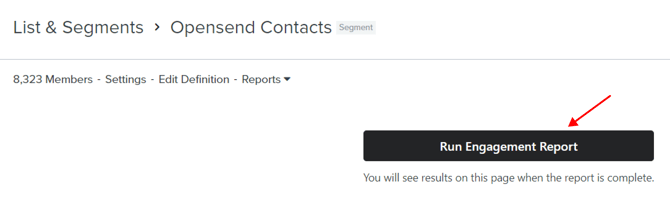
Creates an "Opensend Contacts" segment of all Klaviyo profiles tagged with "Opensend," then runs an Engagement Report to show how those contacts are interacting with your emails. |
|
|
Builds an "Opensend Purchasers" segment that surfaces every Opensend-identified visitor who has placed at least one order within your chosen timeframe, giving you a full list of converted visitors. |
|
|
An additional report for tracking revenue directly attributed to Klaviyo flows and campaigns sent to Opensend-identified contacts. |
Report 1: Total Revenue Per Month
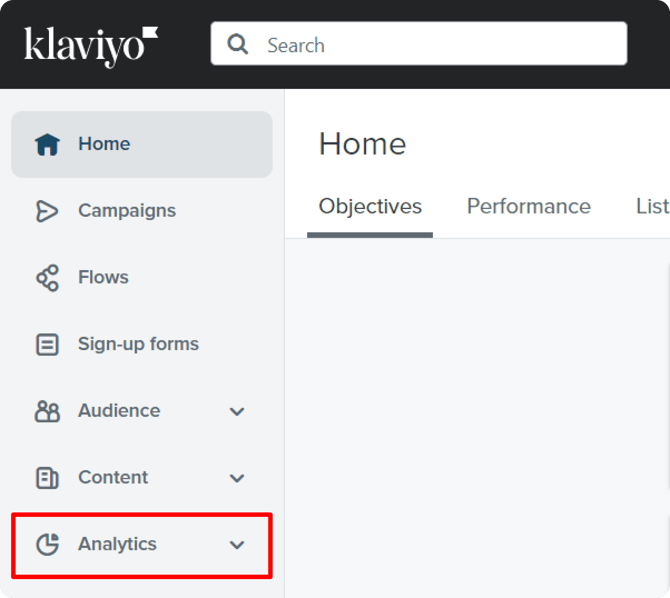
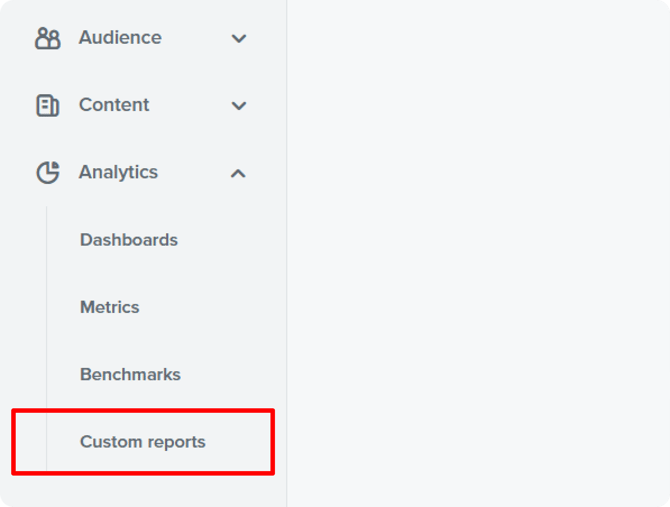
b: Then, select the “Custom Reports” option.
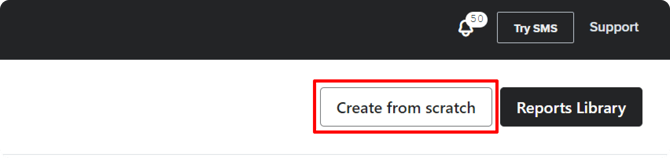
c: On the top right section click on the option “Create from scratch”
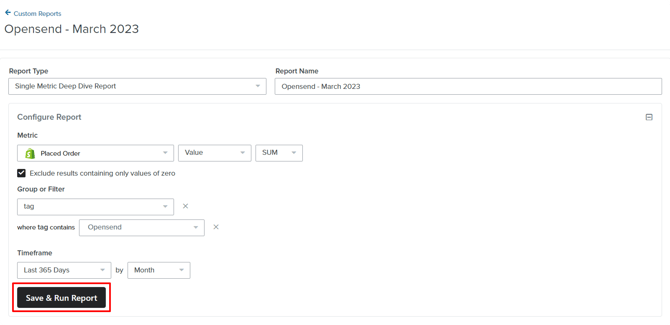
d. On the “Report Type” drop-down, select the option “Single Metric Deep Dive Report”
e. On the “Report Name” area, we recommend naming the report “Opensend Placed Order Value by Month”
f. Standing now on the “Configure Report”, move on to the “Metric” area and select the drop-down to select measure.
g. Select the option “Placed Order” next to a Shopify icon.
h. On the “Total” area, click the drop-down and select the option “Value”
i. On the “SUM” area, the option remains “SUM”
j. Continuing on the section “Group or Filter” click on “+ Add Group By” and select the option named “tag”
NOTE: There might be a similar option named “Tags” – make sure you select only the “tag” option
k. After selecting “tag” it will appear as “equal” and on the next box you will add “Opensend”
l. In the “Timeframe” area select “Last 365 days” and then in the next box select “Month”
m. Click on the “Save & Run Report” option.
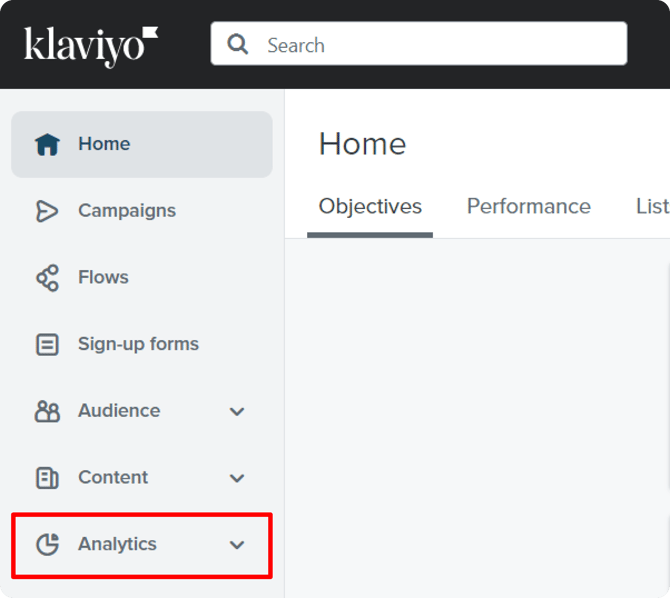
a. Enter your Klaviyo main dashboard and on the left side bar click the “Analytics” dropdown.
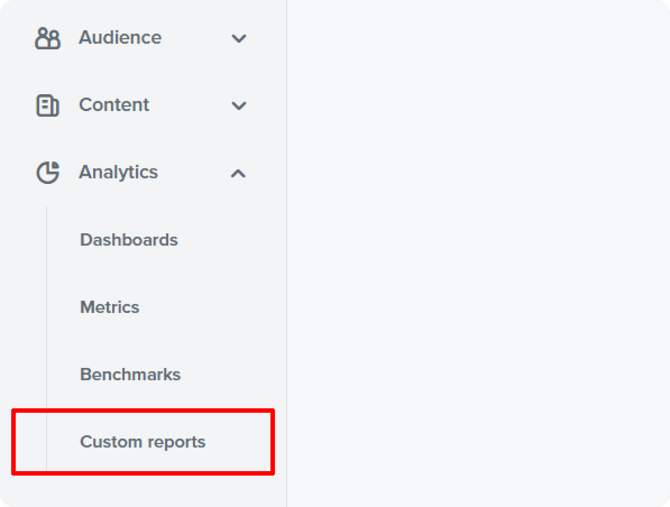
b: Then, select the “Custom Reports” option.
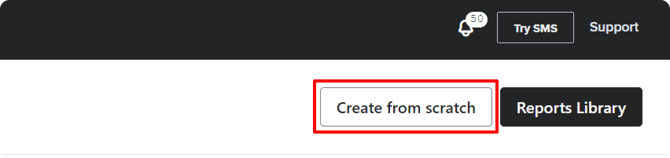
c: On the top right section click on the option “Create from scratch”
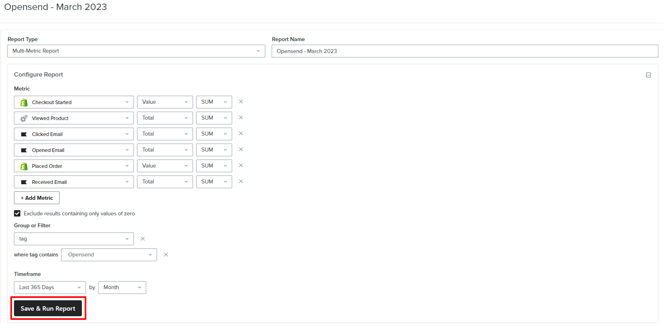
d:On the “Report Type” drop-down, select the option “Multi-Metric Report”
- Select the option “Checkout Started” then option “Value” then option “SUM”
- Select the option “Viewed Product” then option “Total” then option “SUM”
- Select the option “Clicked Email” then option “Total” then option “SUM”
- Select the option “Opened Email” then option “Total” then option “SUM”
- Select the option “Placed Order” then option “Value” then option “SUM”
- Select the option “Received Email” then option “Total” then option “SUM”
h:Continuing on the section “Group or Filter” click on “+ Add Group By” and select the option named “tag”
i:After selecting “tag” it will appear as “equal” and on the next box you will add “Opensend”
j:In the “Timeframe” area select “Last 365 days” and then in the next box select “Month”
k:Click on the “Save & Run Report” option
a: Enter your Klaviyo main dashboard and on the left sidebar click the “Audience” drop down.
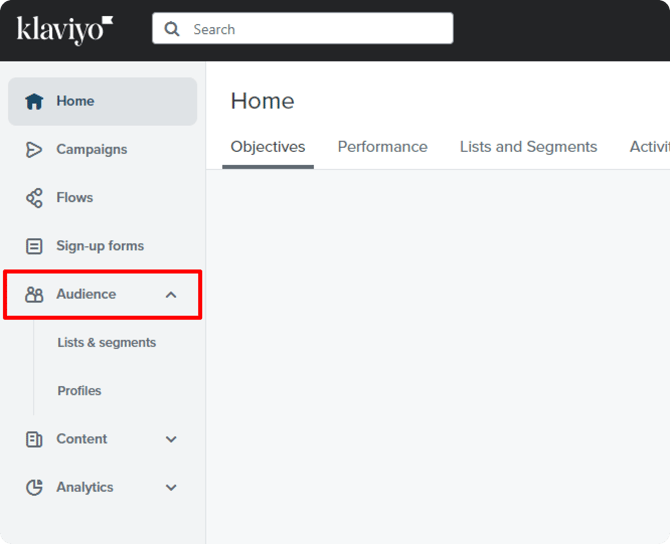
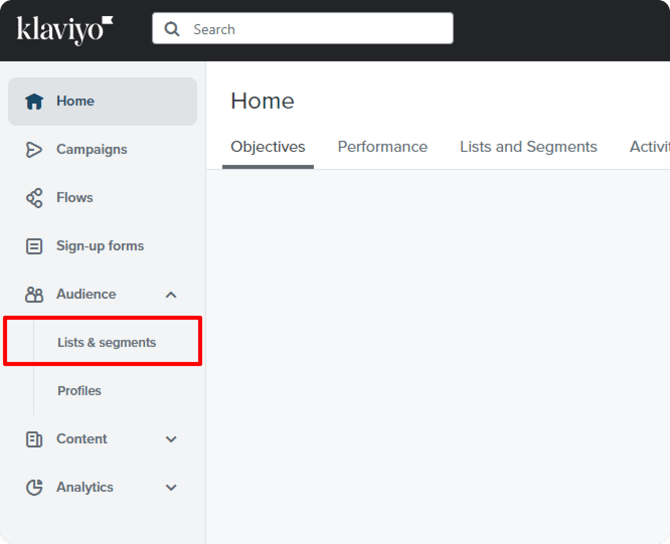
b:Then, select the “Lists & Segments” option.
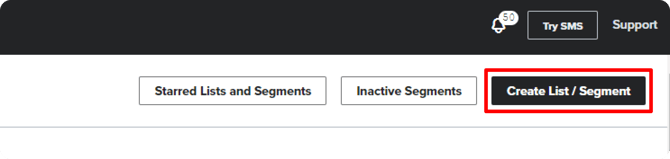
c:On the top right section click on the option “Create List / Segment”
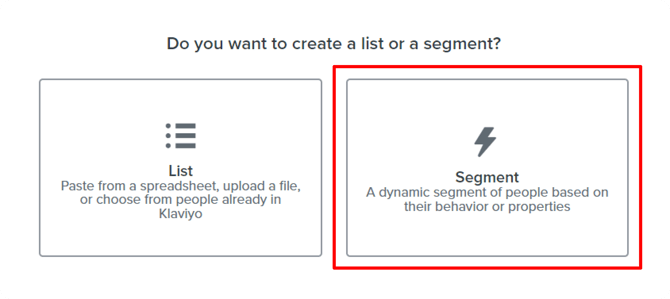
d:Then, select the right box named “Segment”
i:Next, click on “Create Segment”
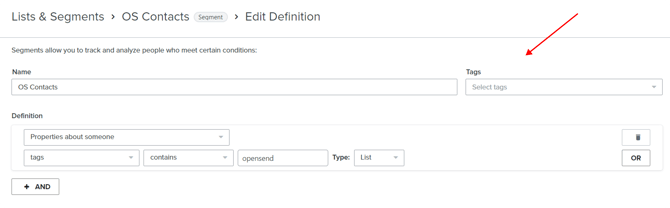
j:Klaviyo will find all of the people that matched the segment and then after the list has charged you will click on the option “Reports” and then click on “Engagement”
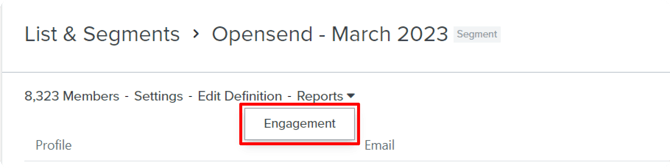
k:Click on the middle button “Run Engagement Report”
Report 4: Opensend-identified purchasers
This report will show you a full list of Opensend-identified visitors who have made purchases.
a: Enter your Klaviyo main dashboard and on the left sidebar click the “Audience” drop down.
b:Then, select the “Lists & Segments” option.
c:On the top right section click on the option “Create List / Segment”
d:Then, select the right box named “Segment”
k: Next, click on “Create Segment”
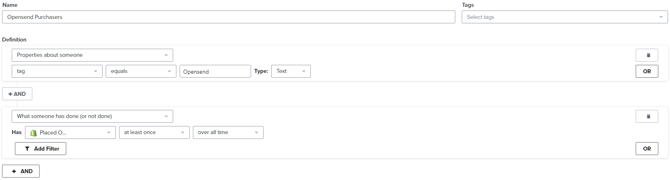
l: Klaviyo will now create the segment and you can see all the individual Opensend-identified visitors who ended up placing an order.
Report 5: Opensend Attributed Revenue Report
1. Log in to Klaviyo
-
Go to Analytics → Custom Reports in Klaviyo.
2. Create a New Report
- Click Create Report
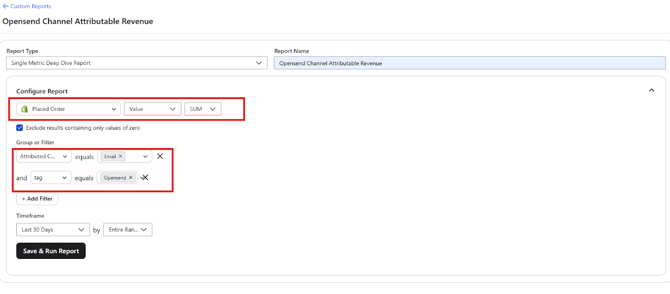
- Report Type: Single Metric Deep Dive Report
- Report Name: Opensend Channel Attributable Revenue
3. Configure the Metric
-
Metric: Placed Order
-
Metric Property: Value
-
Aggregation: SUM
4. Apply Filters
Filter 1
-
Field: Attributed Channel
-
Condition: equals
- Value: Email
Filter 2
-
Field: Tag
-
Condition: equals
-
Value: Opensend
-
Exclude Empty Results
-
Enable Exclude results containing only values of zero
-
-
-
-
Set the Timeframe
-
Timeframe: Last 30 Days
-
View: Entire Range
-
-
-
Run the Report
-
Click Save & Run Report
-
Result: The report will show total revenue from Placed Orders attributed to Email where the tag is Opensend.
For cases where the Attributed Channel property is not available in a Klaviyo account:
Step 1: Open Custom Reports
-
Log in to Klaviyo.
-
Navigate to Analytics.
-
Click on Custom Reports.
-
Select Create Custom Report.
Step 2: Select Report Type and Name
-
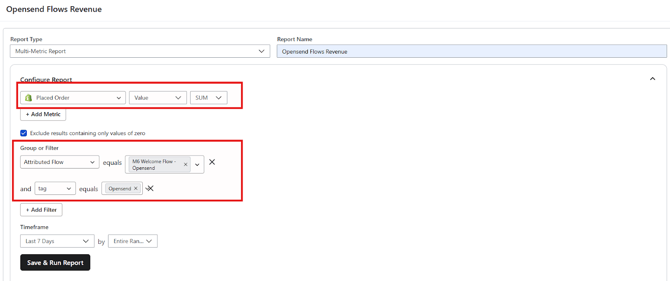
Set the report type to Multi Metric Report.
-
Enter the report name as Opensend Flows Revenue.
Step 3: Configure the Revenue Metric
-
Under Configure Report, select the Placed Order metric.
-
Set Value Aggregation to SUM.
-
Enable Exclude results containing only values of zero.
-
This ensures only revenue-generating data is included in the report.
Step 4: Apply Filters
-
Click Add Filter.
-
Under Group or Filter, add the following conditions:
-
Attributed Flow equals the Opensend specific Welcome Email Flow, and all Abandonment flows.
-
Tag equals Opensend.
-
This ensures the report only includes revenue generated from Opensend-related flows and emails.
Step 5: Set the Timeframe
-
Choose your desired timeframe, such as Last 7 Days.
-
Set grouping to Entire Range.
-
You can adjust the timeframe later to 14 days, 30 days, or a custom date range as needed.
Step 6: Save and Run the Report
-
Click Save and Run Report.
-
The report will display total revenue attributed to Opensend-driven flows.
Final Tips
-
For a complete Opensend revenue view, repeat the same steps to create a Campaign Revenue report.
-
The only change required is to select Attributed Message instead of Attributed Flow.